
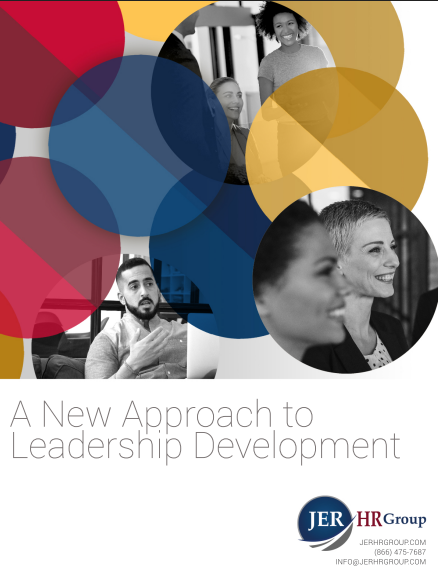
Leadership Development Strategy for a Changing Workplace
A leadership development strategy connects the organization’s priorities to the capabilities leaders need, the experiences that build those capabilities, and the evidence used to improve the system.
Leadership development should not be limited to a course calendar or a single program. It is a coordinated approach to role expectations, assessment, learning, coaching, work experience, manager reinforcement, succession, and measurement. The right design depends on the organization’s strategy, workforce, leadership levels, operating environment, and available evidence.
Leadership Development Strategy for a Changing Workplace is a downloadable guide for HR leaders, executives, and talent-development professionals evaluating how leadership development should evolve. It provides a practical framework for defining priorities and building reinforcement into the work.
What a Leadership Development Strategy Should Connect
| Decision area | Questions to answer | Useful evidence |
|---|---|---|
| Business priorities | What changes or outcomes require stronger leadership capability? | Strategic plans, workforce risks, operating priorities, and stakeholder interviews |
| Audience | Which leadership levels and roles need development first? | Role scope, decision authority, workforce plans, and succession needs |
| Capabilities | What should leaders know and do differently? | Competency models, role expectations, critical incidents, and performance evidence |
| Development method | What combination of learning and experience fits the capability? | Assessment results, participant needs, work context, and available support |
| Reinforcement | Who will coach, observe, and support application? | Manager capacity, operating routines, peer networks, and project opportunities |
| Measurement | What evidence will inform improvement and investment decisions? | Participation, learning, application, talent, and relevant operational indicators |
A Seven-Step Leadership Development Framework
- Define the organizational need. Translate strategy and workforce priorities into specific leadership decisions or behaviors.
- Segment the audience. Distinguish emerging leaders, frontline managers, experienced leaders, executives, and role-specific populations.
- Set capability expectations. Describe observable knowledge, skills, behaviors, and proficiency levels rather than relying on broad labels.
- Establish a baseline. Use proportionate evidence such as interviews, assessments, surveys, performance information, and succession review. No single assessment should determine a high-stakes talent decision.
- Design the experience. Combine instruction with practice, feedback, coaching, peer learning, stretch work, and reflection as appropriate.
- Build reinforcement. Prepare managers and sponsors to clarify expectations, observe application, remove barriers, and provide useful feedback.
- Measure and govern. Review access, participation, learning, application, talent movement, and relevant organizational evidence without assuming the program alone caused an outcome.
Why One-Time Training Is Not a Strategy
A workshop can introduce concepts and provide practice, but sustained application also depends on role clarity, workload, systems, incentives, manager behavior, decision authority, and opportunity. Development plans should identify what happens before and after formal learning, who owns each step, and how the organization will respond when the work environment conflicts with the intended behavior.
The guide complements JER HR Group’s Leadership Excellence Program, Foundations of Leadership Program, and executive coaching services. Organizations defining role expectations may also review competency model development and employee survey services.
How to Use the Downloadable Guide
- Compare current leadership-development activity with the organization’s strategic priorities.
- Identify capability, audience, reinforcement, and measurement gaps.
- Use the framework to structure discussions with executives, HR, managers, and participants.
- Prioritize a manageable set of changes instead of launching disconnected activities.
- Document assumptions and review the strategy as roles and business needs change.
Complete the form below to access the white paper. To discuss a leadership-development strategy, contact JER HR Group.
This resource provides general leadership-development and HR information. Development activity does not guarantee promotion, retention, performance, or organizational outcomes; results depend on implementation and workplace context.
LET’S TALK ABOUT PEOPLE, IDEAS, AND SOLUTIONS.
If you want to recruit, engage, develop, and retain the best team in the business, get in touch with us.
NEW YORK OFFICE
New York, NY 10120
NORTH CAROLINA OFFICE
Raleigh, NC 27613
ARKANSAS OFFICE
Bentonville, AR 72712
TEXAS OFFICE
Suite 175 PMB 1024
The Woodlands, TX 77381


