
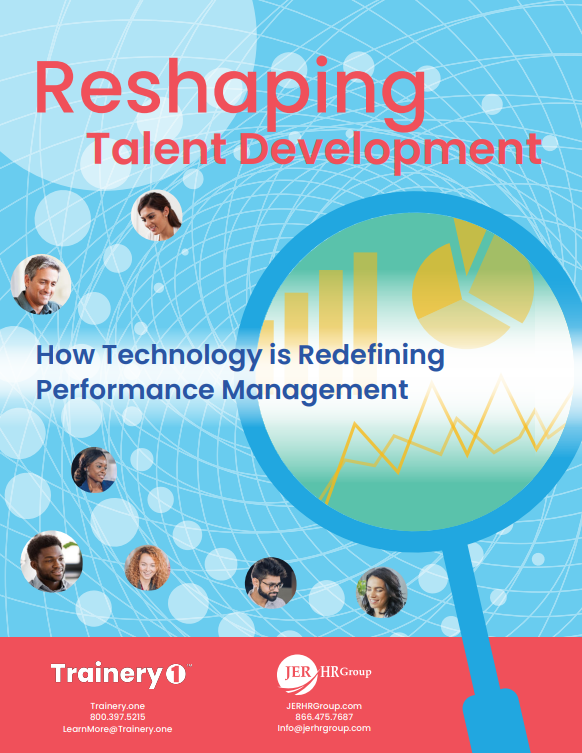
Talent Development Technology and Performance Management
Reshaping Talent Development: How Technology Is Redefining Performance Management examines how assessment tools, learning platforms, content libraries, artificial intelligence, and skills data can support a more connected approach to employee development and performance conversations.
Technology can organize information and make workflows easier to repeat, but it does not determine sound performance expectations, fair decisions, or meaningful development priorities. Those responsibilities remain with leaders, managers, HR teams, and employees.
What Talent Development Technology Can Support
| Capability | Potential use | Important limitation |
|---|---|---|
| Assessments and competency data | Identify role-relevant strengths, gaps, and development priorities. | Results require validation and should not be treated as a complete measure of capability. |
| Learning platforms and content libraries | Assign, deliver, and track structured learning. | Completion does not prove application or proficiency. |
| Goal and feedback workflows | Document expectations, check-ins, coaching, and progress. | Software cannot replace manager judgment or a fair review process. |
| Skills and career-path tools | Map possible development options and internal opportunities. | Recommendations should not imply a guaranteed promotion or fixed career path. |
| Artificial intelligence and analytics | Summarize patterns, suggest content, or support administrative work. | Outputs require human review, data governance, and testing for inappropriate bias or error. |
Questions to Ask Before Selecting Performance Management Technology
- Which employee, manager, or HR decision is the technology expected to support?
- What information is required, and which system is the authoritative source?
- Who can view, change, export, or delete employee and performance data?
- How will employees understand the information collected and how it is used?
- What accessibility, language, mobile, security, privacy, and integration requirements apply?
- Where is human review required before feedback, recommendations, or employment decisions are made?
- How will the organization test workflows, correct errors, and document changes?
A Practical Implementation Sequence
- Define the operating problem. Document the current workflow, users, delays, duplicated work, and decision risks.
- Clarify roles and governance. Assign ownership for content, data, access, configuration, support, and final decisions.
- Design the employee and manager experience. Keep expectations, development actions, feedback, and escalation paths understandable.
- Configure and test. Use representative roles, devices, accessibility needs, data conditions, and exception scenarios.
- Prepare managers. Train them on the process, not only the interface, and explain the limits of automated recommendations.
- Pilot before broad rollout. Gather feedback, resolve workflow problems, and verify reports before scaling.
- Measure use and application. Review completion, quality, timeliness, error patterns, support needs, and whether the process informs useful action.
How Technology Fits Into Modern Performance Management
A connected approach links role expectations, goals, feedback, learning, and development evidence without assuming that every activity belongs in one platform. Organizations may use separate systems if ownership, data flow, and the employee experience are clearly defined.
Use the white paper as a foundation for evaluating the relationship between technology and talent practices. Then compare its ideas with your current strategy, workforce needs, system capabilities, and governance requirements.
Related JER HR Guidance
- Performance Management Services
- Employee Development Services
- People-First Employee Development Strategy
- HRIS and LMS Integration Planning Guide
- Building a Continuous Learning Culture
Download the white paper using the form on this page, or contact JER HR Group to discuss performance management, learning, and employee-development priorities.
This resource provides general HR and technology-planning information. Organizations should evaluate employment, privacy, accessibility, security, and recordkeeping requirements applicable to their circumstances.
LET’S TALK ABOUT PEOPLE, IDEAS, AND SOLUTIONS.
If you want to recruit, engage, develop, and retain the best team in the business, get in touch with us.
NEW YORK OFFICE
New York, NY 10120
NORTH CAROLINA OFFICE
Raleigh, NC 27613
ARKANSAS OFFICE
Bentonville, AR 72712
TEXAS OFFICE
Suite 175 PMB 1024
The Woodlands, TX 77381


