

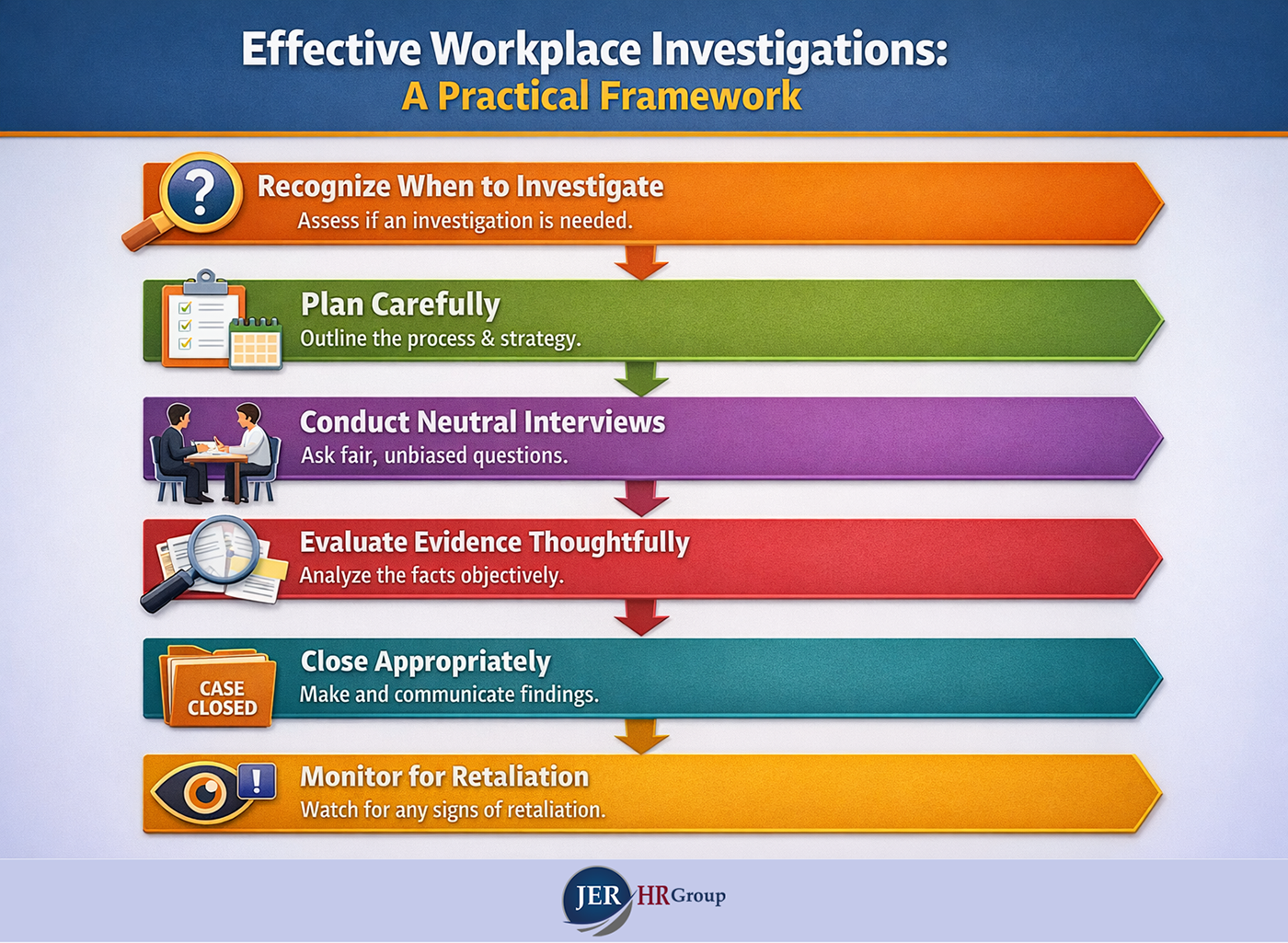
An HR investigation process gives employers a consistent way to receive a workplace complaint, preserve evidence, interview the people involved, evaluate facts, document findings and follow through. The process should be prompt, impartial and tailored to the allegation—not improvised after a complaint arrives.
Not every concern requires the same response. Coaching or informal resolution may be appropriate for some workplace issues. Allegations involving harassment, discrimination, retaliation, safety, fraud, ethics or serious policy violations generally require prompt triage and may warrant a formal investigation. Applicable law, collective bargaining obligations and company policy should guide the response.
When independence, sensitivity, or internal capacity is a concern, employers can use JER HR Group’s workplace investigation services for neutral fact-finding, documentation, and practical follow-up support.
What Is the HR Investigation Process?
The HR investigation process is a structured fact-finding review used to determine what happened, whether a policy or legal standard may have been violated, and what action the organization should consider. A sound process protects the integrity of the review while giving the complainant, respondent and relevant witnesses a fair opportunity to provide information.
The EEOC recommends a prompt, thorough and impartial investigation for harassment complaints. Employers should communicate that information will be kept confidential only to the extent possible consistent with a complete investigation.
Seven Steps in a Defensible HR Investigation Process
1. Receive the Complaint and Assess Immediate Risk
Document the concern in the employee’s own words, identify the issues potentially involved, and assess whether immediate steps are needed to protect people or evidence. Interim measures should not be punitive or create retaliation concerns.
2. Define the Scope and Select an Impartial Investigator
Translate the complaint into specific allegations. Select an investigator with appropriate experience and no actual or perceived conflict of interest. Sensitive, executive-level or legally complex matters may warrant outside counsel or an external investigator.
3. Create an Investigation Plan and Timeline
List the people to interview, documents and systems to review, evidence-preservation actions, applicable policies, decision-makers and communication checkpoints. There is no universal HR investigation timeline; complexity, witness availability, evidence volume and legal requirements affect duration. Record and communicate material delays.
4. Preserve and Review Relevant Evidence
Secure emails, messages, personnel records, schedules, video or other relevant materials according to lawful access and retention practices. Build a chronology and distinguish verified facts from assumptions.
5. Conduct Neutral Interviews
Begin with open-ended questions, test details with focused follow-ups and ask each person to identify witnesses or documents. Explain the process, limits of confidentiality and anti-retaliation expectations. The respondent should receive a meaningful opportunity to address the allegations.
6. Evaluate Evidence and Document Findings
Assess consistency, corroboration, plausibility, motive and documentary support. Apply the standard of proof established by applicable policy or law; do not assume one standard fits every matter. For each allegation, document the evidence, factual findings, conclusion and rationale.
7. Close the Matter and Monitor for Retaliation
Tell the complainant and respondent that the review is complete, while limiting disclosure of confidential personnel actions. Implement appropriate measures, securely retain the file and schedule follow-up. The EEOC explains that protected participation and opposition activity may trigger anti-retaliation protections.
HR Investigation Process Checklist
- Complaint and intake notes are dated and preserved
- Immediate safety, retaliation and evidence risks are assessed
- Allegations and scope are clearly defined
- Investigator independence is documented
- Interview and evidence plans are established
- Confidentiality is described accurately, not guaranteed
- Complainant, respondent and relevant witnesses are interviewed
- Findings address each allegation and supporting evidence
- Corrective actions, communications and follow-up have owners
Common Investigation Mistakes
Frequent problems include waiting too long, promising absolute confidentiality, allowing a conflicted manager to control the review, asking leading questions, overlooking electronic evidence, reaching conclusions before interviewing the respondent, applying different standards to similar cases, and failing to monitor for retaliation.
This article provides general HR information and is not legal advice. Requirements vary by allegation, jurisdiction, workforce and governing policy.
Need Support With a Workplace Investigation?
JER HR Group helps employers plan and conduct impartial workplace investigations, organize evidence, document findings and strengthen procedures. Talk with an HR investigations consultant or call 800.397.5215.


